Signal 1
Choice still matters
A safety model should not remove the young adult’s agency or make relationships feel assigned.
Reframing a matching-app idea around the harder problem of helping trust grow safely over time.
Young adults leaving foster care can lose the adults they depend on almost overnight. A digital matching experience initially seemed like a possible way to connect young people with screened adults who wanted to help.
But matching vulnerable young adults with unfamiliar adults creates a different kind of problem: the product has to support connection without creating pressure, exploitation, dependency, or a false sense of safety.
I used one week to explore the problem, define early safety rules, and build a concept that could make those assumptions concrete enough to test.
Why it was messy
A typical marketplace model would optimize for discovery and fast matching. In this context, those same mechanics could expose young adults to unwanted attention, encourage premature trust, and place too much responsibility on them to judge adults they do not know.
Signal
The research and program models I reviewed suggested that young adults need relationships that are voluntary and steady, while also needing protection from exploitation, pressure, and sudden abandonment.
That changed the problem for me. Instead of asking how to create better matches, I started asking how a system might let trust develop gradually, visibly, and with room to leave.
Signal 1
A safety model should not remove the young adult’s agency or make relationships feel assigned.
Signal 2
Relying on one adult creates a single point of failure if that person becomes unavailable or the relationship does not work.
Signal 3
Early interactions need more visibility and structure than established relationships do.
Decision
Instead of showing young adults a catalog of adult profiles, the concept lets them ask a screened network for specific kinds of support. Relationships can then grow out of real interactions rather than a profile-based match.
The model also uses a small support circle rather than placing all responsibility on one mentor.
Tradeoff
I deliberately removed mechanics that would make the product feel faster or more familiar: no open profile browsing, instant matches, or unrestricted early messaging.
Direction
The prototype turns the trust model into something a young adult could actually react to. The four primary areas focus on orientation, transparent requests, relationship structure, and communication boundaries.
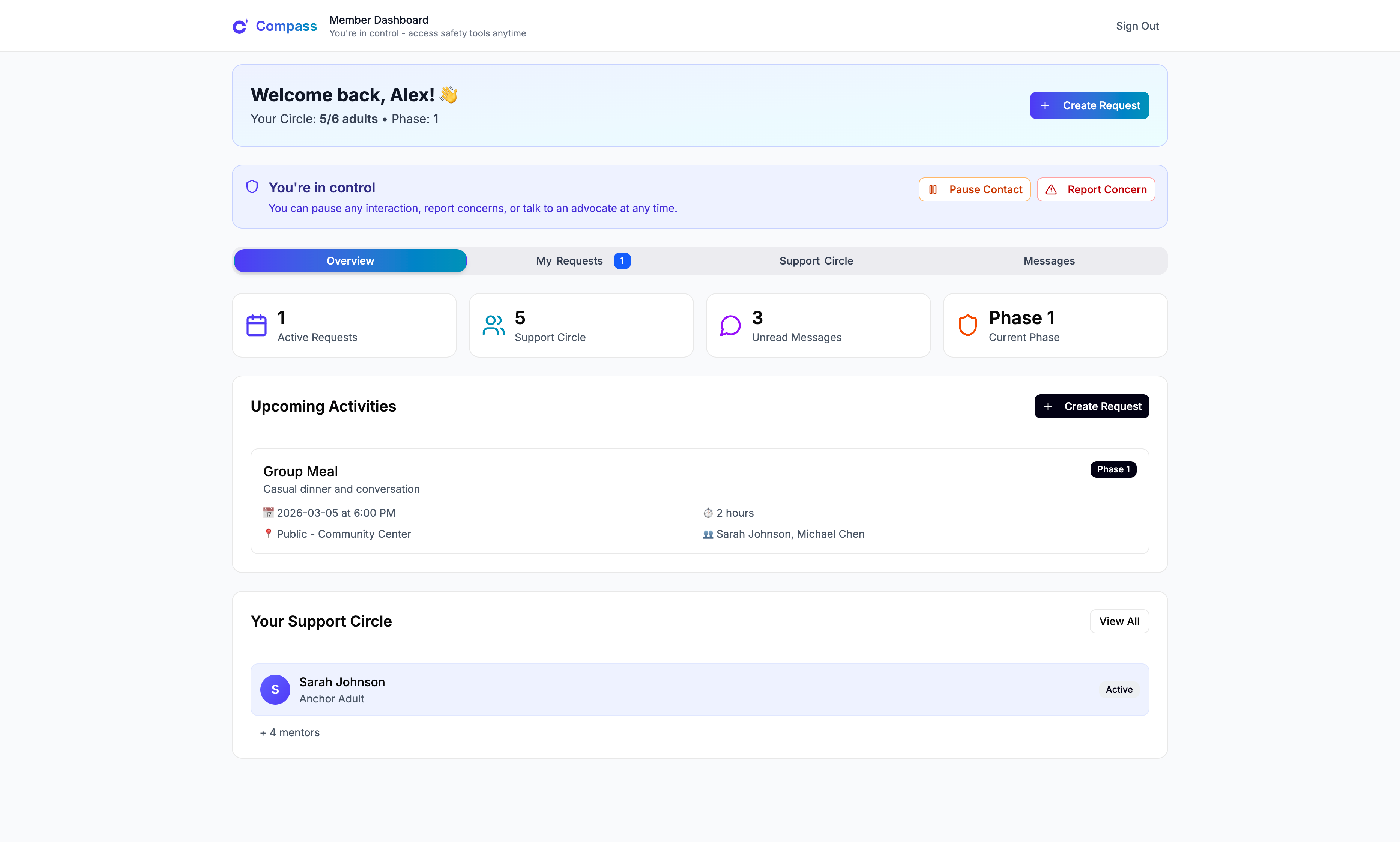
01: Overview
The dashboard brings active requests, the current relationship phase, unread messages, upcoming activities, and the young adult’s support circle into one view. Safety actions remain visible rather than being buried in settings.
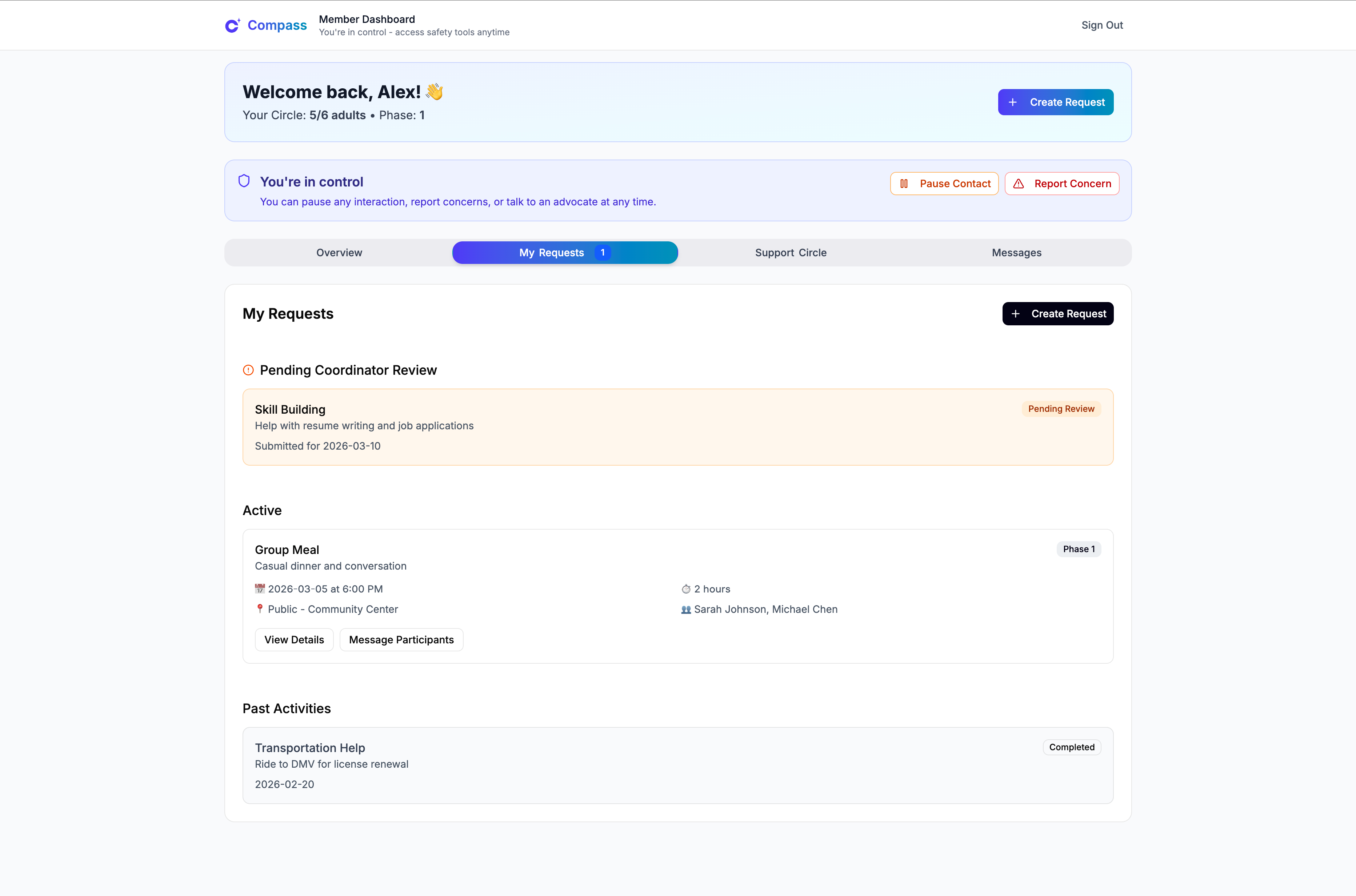
02: Requests
Young adults can see requests awaiting coordinator review, currently active, or already completed. Each request shows the people involved and what happens next.
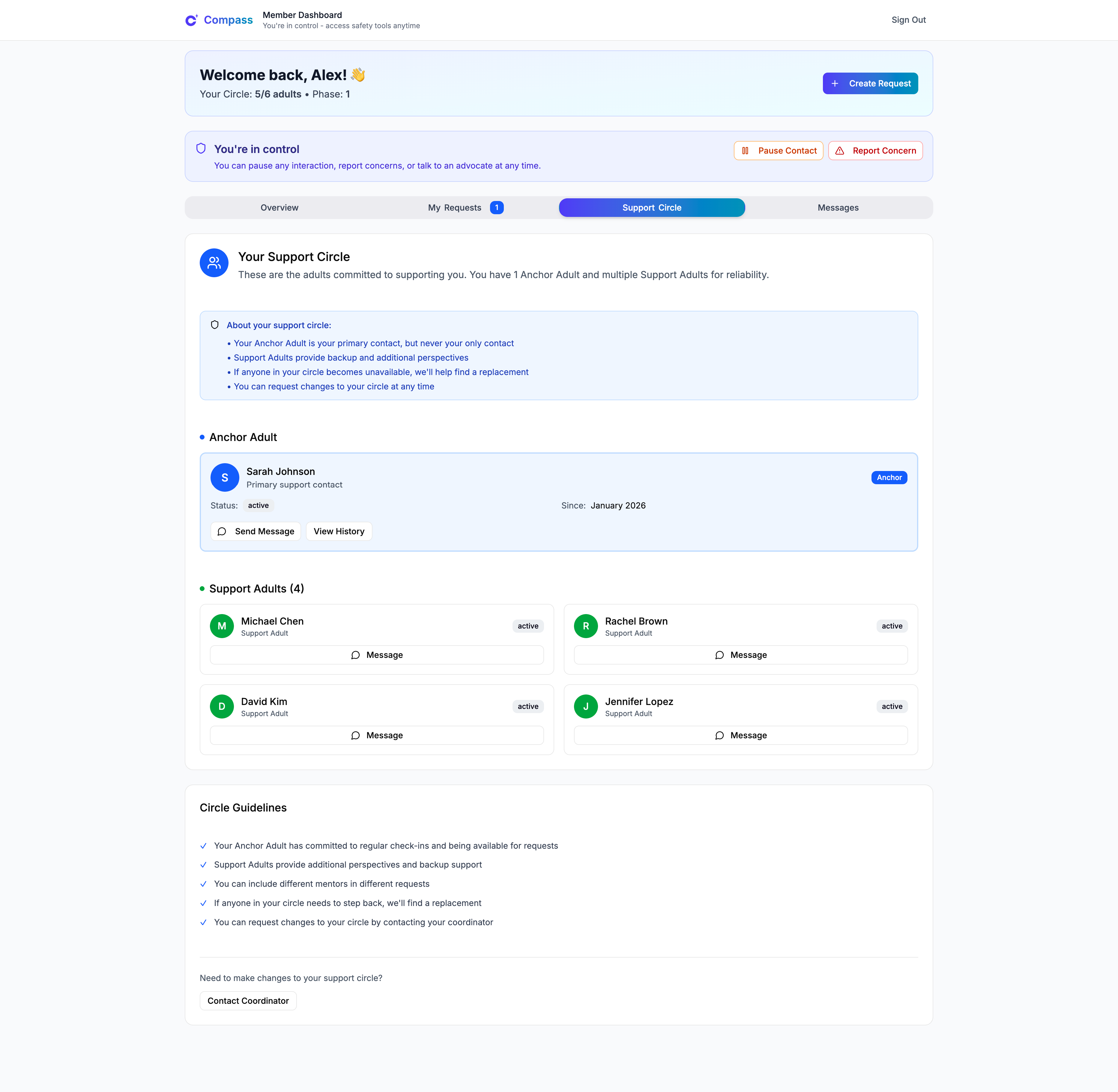
03: Support circle
The circle distinguishes a primary Anchor Adult from additional Support Adults. This creates consistency without making one person the young adult’s only source of support.
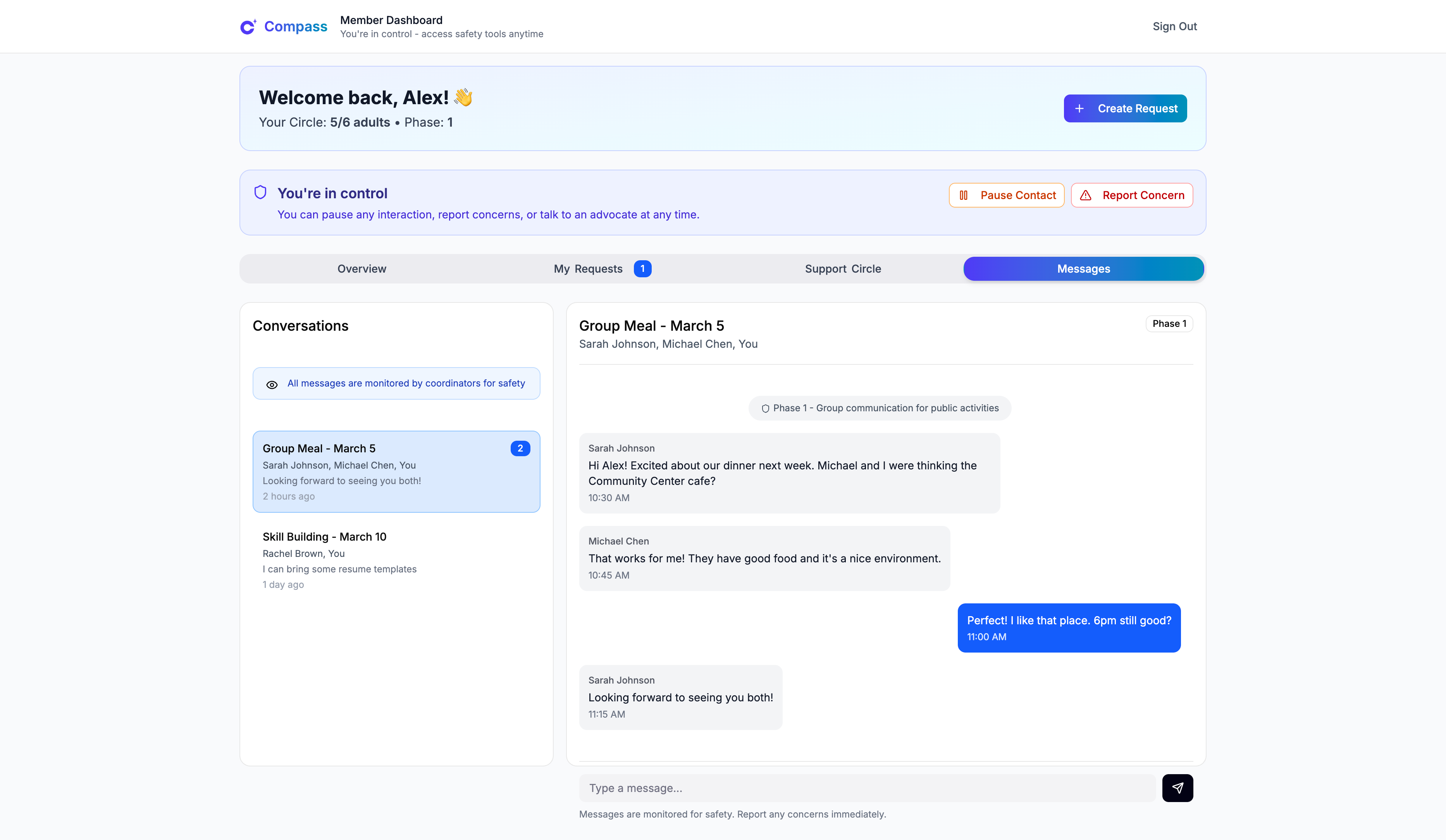
04: Messages
Messaging is tied to a specific request or activity and displays the relationship phase. Group conversations and a plain-language monitoring notice create more visibility while relationships are still developing.
Evidence
The prototype is not evidence that the model is safe or effective. Its value is that it makes the assumptions visible enough for young adults, practitioners, and safeguarding experts to challenge them before a larger investment.
The next step would be to test whether people understand the relationship phases, feel they retain meaningful control, trust the coordinator’s role, and believe the safeguards would actually help rather than create friction or false reassurance.