Signal 1
Patients needed to see that participation mattered
Research could not feel like a one-way stream of surveys if we wanted people to keep contributing.
Turning disconnected research tools and processes into one clearer system for patients and the teams learning from them.
The patient feedback program relied on several disconnected tools. Research took too long to set up, it was difficult to reach the right participants, and patients often felt like their feedback disappeared into a “black hole.”
As the Solution Delivery Manager, I was responsible for both the program and the product. I worked with a researcher and partners across legal, privacy, technology, marketing, and product teams to understand where the system was breaking down and what a better model needed to do.
Why it was messy
Teams needed faster access to useful patient feedback, but the experience also had to earn continued participation from patients. Fixing only the internal workflow would still leave people wondering whether their time mattered.
Signal
Survey feedback suggested that many patients did not know whether their input made a difference. Internally, teams had to rebuild parts of the research process each time they wanted to learn something. That pointed to a system problem: participation, research operations, and communication back to patients needed to work together.
Signal 1
Research could not feel like a one-way stream of surveys if we wanted people to keep contributing.
Signal 2
Participant targeting, study setup, and reporting needed to be easier to repeat instead of rebuilt for every project.
Signal 3
Community data had to remain separate from clinical records, which limited what could be connected and required close work with legal, privacy, and technology partners.
Decision
I compared platform options and recommended a purpose-built community that could support both sides of the system: a better experience for patients who volunteered their time and a more consistent research workflow for internal teams.
01: Patient experience
Patients could join studies, answer questions, see community updates, and learn how their feedback was being used.
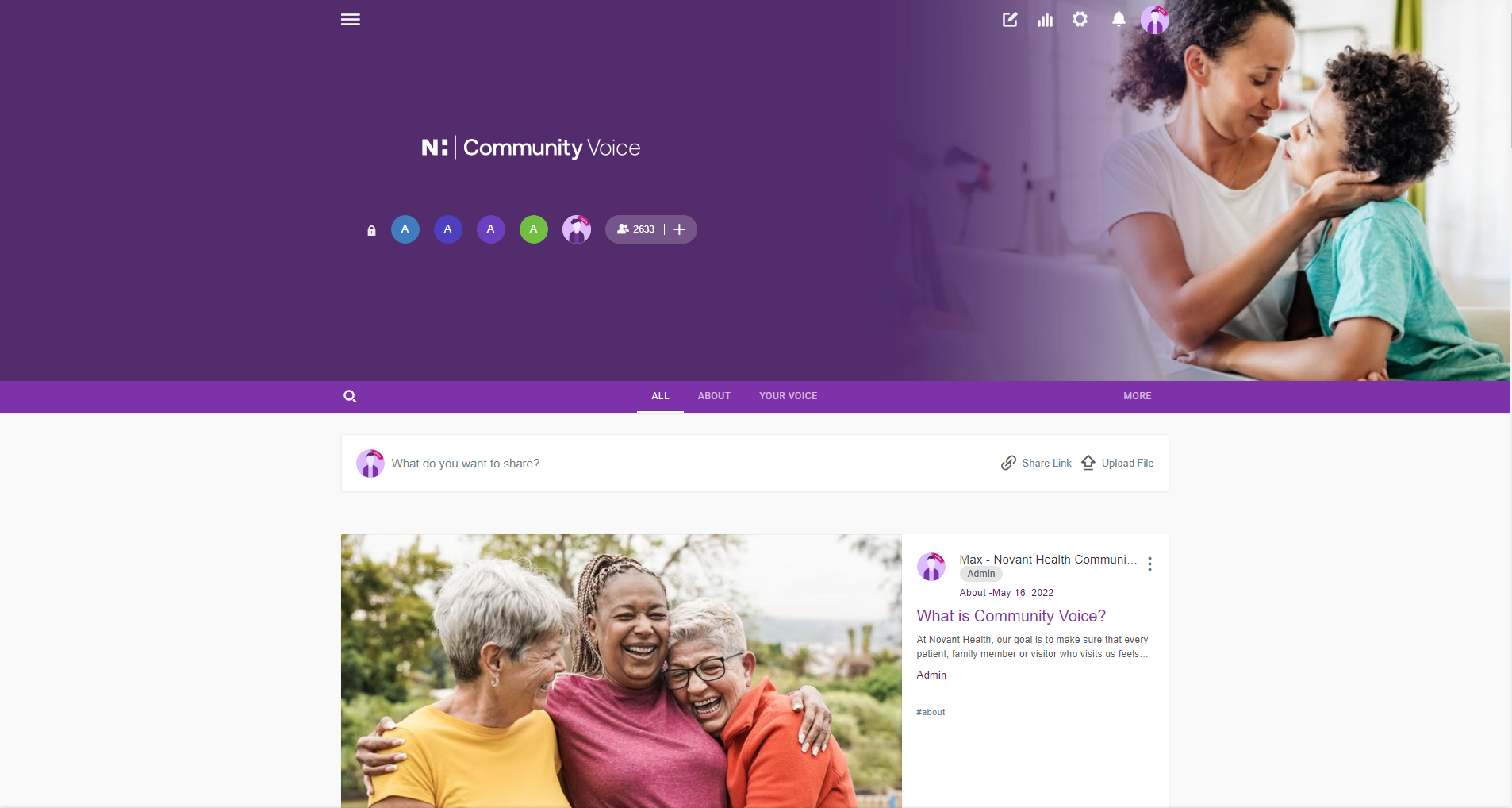
02: Team workflow
Internal teams could find participants, organize studies, and manage the community without switching between several tools.
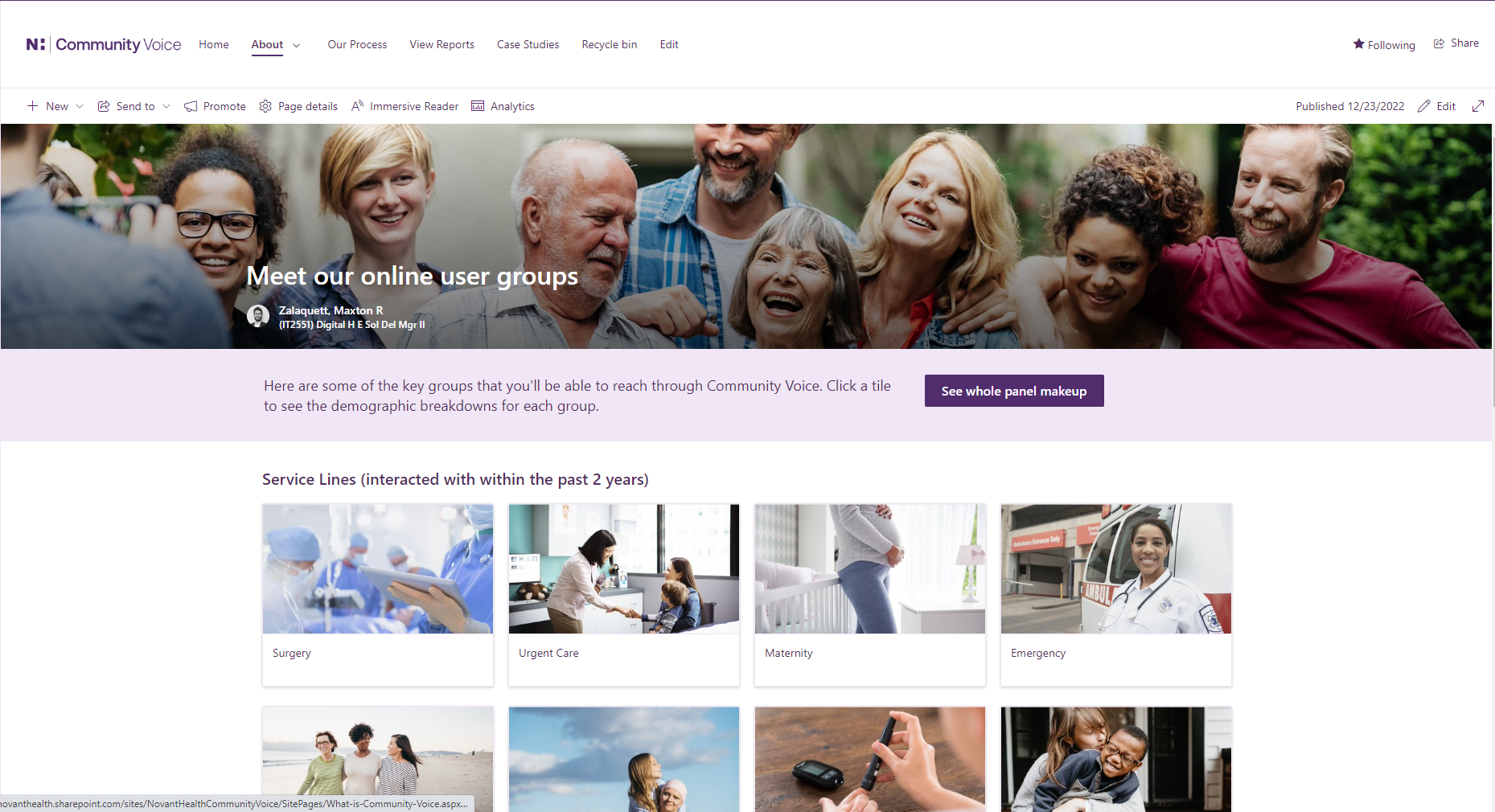
03: Shared process
A shared process helped teams decide what they needed to learn, reach the right patients, and keep the study moving with fewer handoffs.
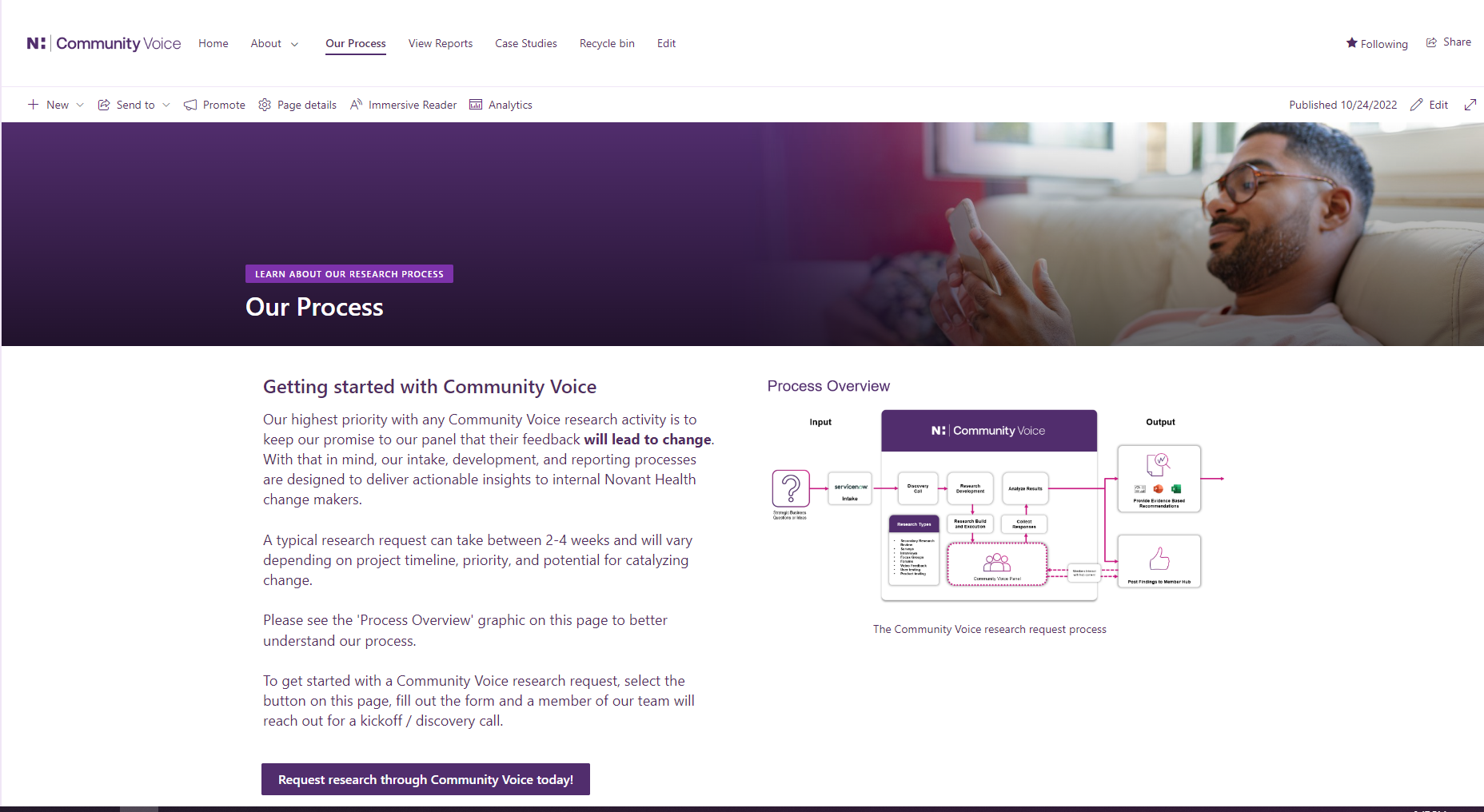
04: Evidence sharing
Teams could review results in a consistent format, which made findings easier to understand, share, and carry into later decisions.
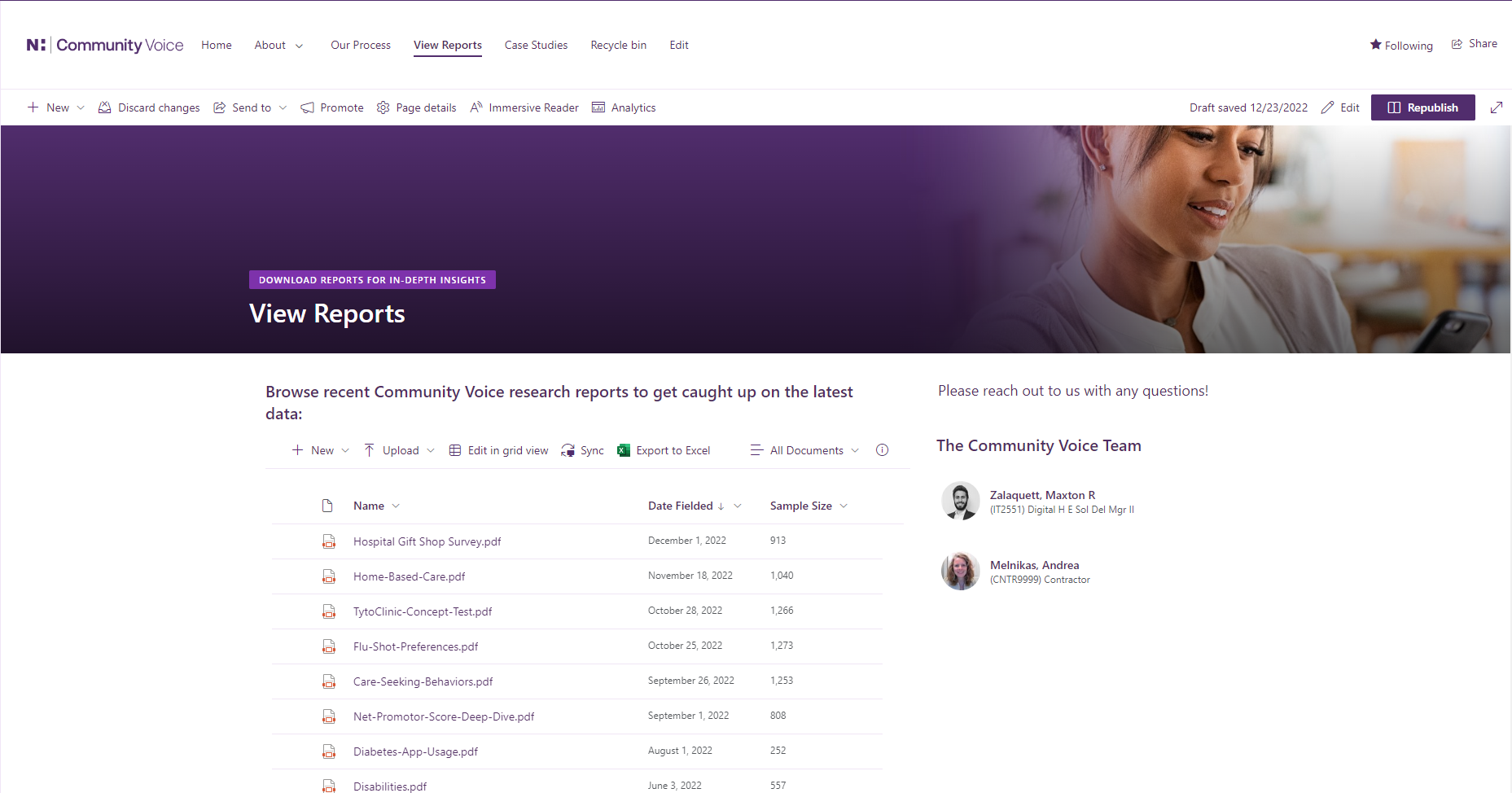
05: Close the loop
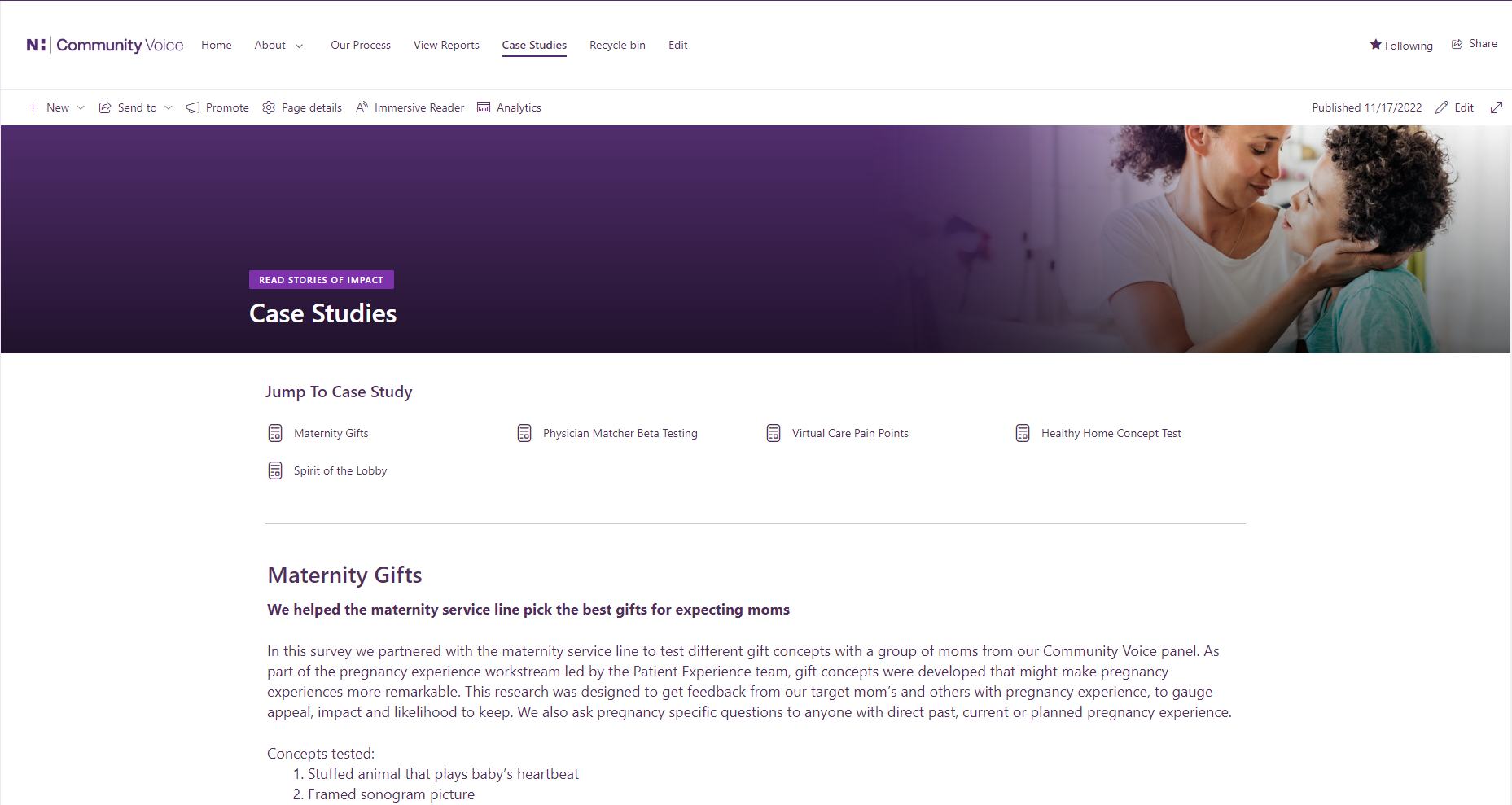
Case studies documented what the team learned, what changed, and how patient feedback shaped the result.
Tradeoff
The community needed enough participant information to support useful targeting, but it could not simply become another extension of the clinical record. I worked with legal, privacy, and technology partners to keep those boundaries explicit while still making the research workflow more useful.
Evidence
The results suggest that the program made it easier to reach the right patients and run more focused feedback efforts. These outcomes came from the work of the researcher, program partners, participants, and many others across the organization.